This page is a plain-English guide for home educating families on the Children’s Wellbeing and Schools Act 2026. It is not legal advice.
It is written mainly for England. Some Children Not in School provisions also extend to Wales, but the practical home education position, guidance and implementation can differ by nation.
This page aims to collect the key facts clearly and calmly, and does not reflect our opinions or preferences.
Last updated: 23 September 2026
Status: The Children’s Wellbeing and Schools Bill received Royal Assent on 29 April 2026 and is now the Children’s Wellbeing and Schools Act 2026.
However, Royal Assent does not mean every home education provision automatically started on that date. Many provisions depend on separate commencement regulations and, in some cases, further regulations or statutory guidance. This page therefore separates what the Act now says from what is actually in force.
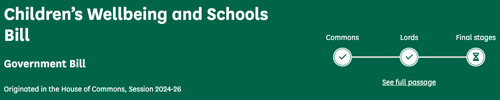
Quick summary
The Children’s Wellbeing and Schools Act 2026 is a wide-ranging law covering children’s social care, schools and education. For home educating families, its most significant changes concern Children Not in School registers, new information requirements, home and learning environments, School Attendance Orders, and circumstances in which some children will need local authority consent before being withdrawn from school.
What is true right now
- The Act received Royal Assent on 29 April 2026.
- Home education remains lawful.
- The basic parental duty under section 7 of the Education Act 1996 remains important.
- Education must be efficient, full-time and suitable to the child.
- Not every provision in the Act came into force on Royal Assent.
- The main CNIS framework should not be treated as fully operational simply because the Bill became an Act.
What the Act introduces
- Formal Children Not in School registers.
- Structured information duties for parents and some providers.
- Consent rules for certain children being withdrawn from school.
- Consideration of homes and other learning environments.
- Changes to the School Attendance Order process.
- Mandatory-meeting pilots in selected local authority areas.
What is the Children’s Wellbeing and Schools Act 2026?
The legislation began as the Children’s Wellbeing and Schools Bill and completed its passage through Parliament in April 2026. It received Royal Assent on 29 April 2026, becoming the Children’s Wellbeing and Schools Act 2026.
Home education is only one part of a much larger Act. The government says the Children Not in School measures are intended to improve visibility of children who are not attending school, identify children who may not be receiving a suitable education or may be at risk of harm, and provide a clearer framework for local authority support and intervention.
Important distinction: an Act becoming law and every provision in that Act coming into force are not necessarily the same thing. The Act allows different provisions to be commenced at different times through regulations. That distinction is particularly important for the new Children Not in School system.
The basic legal position still matters
Under section 7 of the Education Act 1996, parents are responsible for ensuring that a child of compulsory school age receives an efficient full-time education suitable to their age, ability and aptitude, and to any special educational needs they may have, either by regular attendance at school or otherwise.
The Children’s Wellbeing and Schools Act adds a substantially more formal registration and oversight framework, but it does not abolish home education or replace section 7 with a requirement to reproduce school at home.
What parents are responsible for
- Ensuring their child receives a suitable, efficient, full-time education.
- Being able to explain how that education is being provided if its suitability is questioned.
- Responding appropriately to lawful enquiries or information requirements.
What has changed at legislation level
- The new registration and oversight framework has now been enacted by Parliament.
- Some provisions still need to be commenced before they operate in practice.
- Further regulations and statutory guidance will matter to the practical detail.
For the existing legal baseline, see: Home Education Law (UK / England guide).
Children Not in School (CNIS) register: the biggest practical change
Section 38 of the Act creates the new Children Not in School registration framework by inserting new sections into the Education Act 1996. Under that framework, local authorities in England and Wales will be required to maintain registers of eligible children.
The framework is wider than simply keeping a list of families who describe themselves as elective home educators. It can also cover some children in flexi-schooling and other mixed education arrangements.
Who can fall within the register?
- Children of compulsory school age who are not registered at a relevant school.
- Children registered at a relevant school who have an arrangement to receive some or all education elsewhere.
- Certain 14–16-year-olds attending further education part-time who are not also attending a relevant school.
What parents will have to provide
- The child’s name, date of birth and relevant address information.
- Names and home addresses of parents.
- Which parent or parents are providing education.
- An estimate of time the child spends being educated by their parent or parents.
- An estimate of time spent receiving education from other people or providers.
- Further provider information where statutory thresholds apply.
The 15-day rules: the final Act contains specific 15-day information duties. Once the relevant provisions are in force, a parent of a newly eligible child must provide required information they hold within 15 days of the child becoming eligible for registration. A later request for required information will normally also have a 15-day response period, unless the authority allows longer. Certain changes to core information must also be notified within 15 days of the parent becoming aware of the change.
What this means in practice: once commenced, this is more than a one-off registration exercise. It creates an ongoing information framework and a more formal relationship between many home educating families and their local authority.
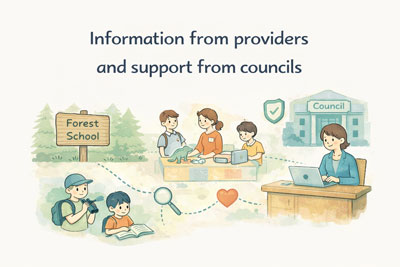
Information from providers and support from councils
The Act is not limited to information supplied by parents. It also creates information-gathering powers involving some people or organisations providing education outside school, alongside duties relating to support.
Providers
- Local authorities can require information from a person they reasonably believe is providing out-of-school education to an eligible child for more than a prescribed amount of time.
- The relevant amount of time is to be set through regulations.
- That means families should be cautious about treating any particular number of hours circulating online as the final universal threshold unless it appears in the relevant regulations.
Support
- The registration framework also contains a duty for local authorities to provide certain support to parents of registered children when requested.
- The practical form of that support will depend on the legislation, regulations, guidance and local implementation.
- The new system is therefore framed as involving support as well as registration, information-sharing and intervention.
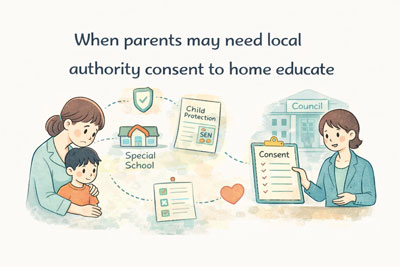
When parents may need local authority consent to home educate
Section 37 of the Act creates an important exception to the usual process of withdrawing a child from school for home education. Once the relevant provisions are in force, local authority consent will be required before certain children can be removed from a school’s register in order to be educated otherwise than at school.
The categories include children who
- Are currently subject to a section 47 Children Act 1989 enquiry.
- Are on a child protection plan.
- Were on a child protection plan during the previous five years.
- Attend certain special schools or fall within specified special-school arrangements.
What this does not mean
- It is not a blanket requirement for every parent to obtain council permission to home educate.
- The consent requirement applies to specified categories of children.
- The Act provides a route to challenge relevant consent decisions.
How this works: where the statutory consent requirement applies, the local authority must make its decision as promptly as possible. The Act provides for refusal where the authority considers that suitable alternative education arrangements are not in place or that regular school attendance would be in the child’s best interests.
What about children already being home educated? The Act also contains provisions affecting some children already educated at home where specified safeguarding circumstances apply. This is distinct from saying that all existing home educators need permission to continue home educating.
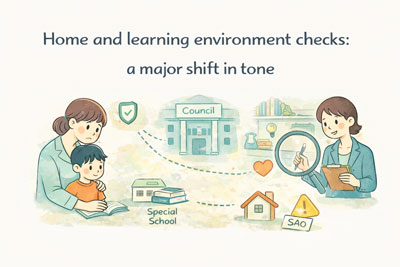
Home and learning environment checks: a major shift in tone
One of the more significant changes in the final Act is the explicit consideration of the child’s home and other places in which education is being provided.
What the Act provides for
- Local authorities must consider the child’s home within the relevant registration timeframe.
- The authority has a power to request to visit the child in their home.
- The request must be made within the statutory period, although the visit itself can take place later.
- Authorities must also consider other settings they know the child is being educated in.
Why this matters
- This represents a more formal statutory interest in the environment in which home education takes place.
- The legislation describes a power to request a home visit; it does not create a general power of forced entry for this purpose.
- However, refusing a requested visit is not necessarily consequence-free.
Important: if a parent refuses a requested home visit, the Act says the local authority must consider that refusal as a relevant factor when deciding whether to serve a preliminary notice under the School Attendance Order process. So it would be misleading either to describe this as a power of forced entry or to say that refusing a visit can have no consequences.
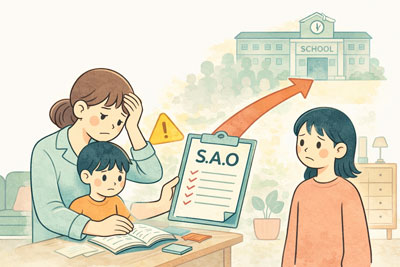
School Attendance Order (SAO) changes
The Act substantially revises the School Attendance Order process. SAOs are the formal mechanism through which a local authority can require school attendance in circumstances set out in law.
Changes include
- New preliminary-notice procedures.
- Statutory timeframes within the process.
- Links to failure to provide required Children Not in School information.
- Consideration of the child’s home and other learning environments.
- Consideration of a refused home-visit request as a relevant factor.
- Provisions relating to children within specified safeguarding categories.
- Changes to enforcement and penalties for breaching an SAO.
Why this matters to parents
- The process becomes more structured and formal.
- Being able to explain clearly what education is taking place is increasingly useful.
- Simple, dated evidence of learning over time can make responding to enquiries much easier.
Mandatory meetings before withdrawal: pilot schemes
Another proposal which survived into the final Act is a requirement for mandatory-meeting schemes to be piloted in selected local authority areas.
In areas participating in a pilot, parents wishing to remove a child from school for home education will be required to attend and participate in a meeting with the local authority before the child’s name can normally be removed from the school register.
The meeting can cover
- The parent’s section 7 education duty.
- How the parent intends to provide a suitable education.
- The reasons for choosing home education.
- Any support the child may need.
- Safeguarding and welfare.
- Support available from the local authority.
Important limits
- This is a pilot, not an automatic nationwide meeting requirement.
- The pilot can operate only in selected local authority areas.
- The child would normally attend too, subject to exceptions.
- This is separate from the consent rules applying to specified categories of children.
Why this distinction matters: a mandatory pre-withdrawal meeting in a pilot area is not the same thing as saying every home educating parent nationally must obtain permission from the council.
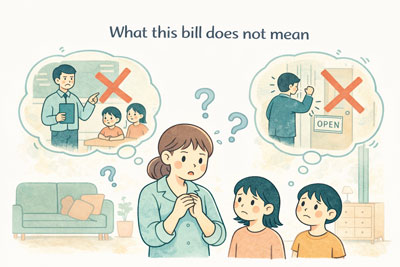
What this Act does not mean
Although the Act creates significantly more formal oversight of children outside school, it is worth separating that from broader claims about home education.
It does not mean
- Home education has become illegal.
- Every parent needs permission to home educate.
- Home educated children must follow the National Curriculum.
- Parents must reproduce school hours at home.
- Every home educating family is automatically subject to an SAO.
- Councils have a general power to forcibly enter home educators’ homes.
- Every provision started operating on the day Royal Assent was granted.
It does mean
- Parliament has enacted a statutory Children Not in School registration framework.
- Once commenced, many home educating families will have formal information duties.
- Councils will have a more structured role in considering home and learning environments.
- Some families will face additional consent requirements.
- The School Attendance Order process is being strengthened and formalised.
- Clear records of education are likely to become increasingly useful.
What home educating parents can do now
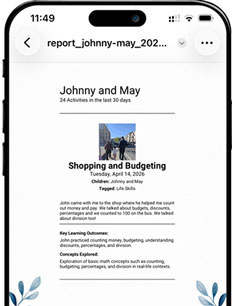
There is no need to turn home education into school-at-home simply because the legislation has changed. But with a more formal information and oversight system now contained in legislation, being organised makes practical sense.
Practical preparation
- Keep a simple dated record of learning over time, (Strew is for this!).
- Make your educational approach easy to describe in plain English.
- Keep useful examples of activities, projects, reading, interests and progress.
- Keep information about tutors, groups or other regular education providers reasonably organised.
- Watch for commencement announcements and updated government guidance rather than assuming every part of the Act is already operational.
You do not necessarily need huge amounts of paperwork. A concise record that demonstrates what education actually looks like over time can be far more useful than trying to recreate a school’s administrative system.
Want a clearer way to keep home education records?
Strew helps you turn everyday activities, notes and photos into a clear, structured home education report. With the Children Not in School framework introducing more formal information requirements, having an organised record can make it much easier to explain what your child’s education looks like without reconstructing months of learning afterwards.
FAQs
Is the Children’s Wellbeing and Schools Bill now law?
Yes. It received Royal Assent on 29 April 2026 and is now the Children’s Wellbeing and Schools Act 2026. However, that does not mean every provision automatically came into force on that date. Some of the main home education provisions require separate commencement and further regulations or guidance.
Does the Act ban or abolish home education?
No. Home education remains lawful. The Act changes registration, information-sharing, oversight, consent requirements for particular children and the School Attendance Order process.
Will every home educating family have to go on a register?
The Children Not in School framework covers children of compulsory school age who meet the statutory eligibility criteria. This includes most children receiving their education entirely at home, but can also include some children in flexi-schooling or other mixed arrangements.
Will every home educating parent need local authority permission?
No. The new consent requirement applies to specified categories of children, including certain children involved in child-protection processes and certain children attending special schools. It is not a general licensing system requiring every family to obtain permission to home educate.
What information will parents have to provide?
Once the registration provisions are in force, required information includes identifying details and information about how the child is educated, including estimates of time spent receiving education from parents and from other people or providers.
How quickly will parents have to provide information?
The Act includes a 15-day period for providing required information when a child becomes eligible for registration. It also generally provides 15 days to respond to a subsequent request for required information, although the local authority can allow longer, and requires certain changes in core information to be reported within 15 days of the parent becoming aware of them.
Can the council come into my home?
The Act gives local authorities a power to request a home visit as part of the Children Not in School framework. It does not create a general power of forced entry for this purpose. However, if a requested visit is refused, the Act requires the local authority to consider that refusal as a relevant factor when deciding whether to begin the preliminary School Attendance Order process.
Will tutors, groups, forest schools or other education providers have to report information?
Potentially. The Act allows local authorities to require information from people they reasonably believe are providing out-of-school education above a prescribed amount of time. Important details, including the relevant threshold, are left to regulations.
Will I have to attend a meeting before deregistering my child?
Not automatically everywhere. The Act provides for mandatory meetings to be piloted in selected local authority areas. In participating areas, the meeting will have to take place before the child can normally be removed from the school roll for home education. This is separate from the consent rules applying to specified categories of children.
Do home educated children now have to follow the National Curriculum?
No. The Act does not make the National Curriculum compulsory for ordinary elective home education. Parents remain responsible for providing an efficient, suitable, full-time education appropriate to the child.
Do I need to start producing school-style reports?
There is no universal requirement in the Act saying every home educating parent must produce a particular school-style report. However, the new system contains considerably more formal information requirements. Keeping a clear record of activities, learning and progress may make it much easier to respond to enquiries and demonstrate what education looks like in practice.
Does this change the basic legal test for suitable education?
The basic section 7 duty remains: parents must ensure an efficient, suitable, full-time education appropriate to the child’s age, ability and aptitude and any special educational needs. The Act changes oversight, registration and process rather than turning home education into a requirement to reproduce school.
Can a child with SEN still be home educated?
Yes. Home education is not abolished for children with special educational needs. However, special-school placements and some other circumstances can affect whether consent is needed before a child is removed from a school roll, so the individual legal position can matter.
Can councils make a child go back to school?
The School Attendance Order framework can ultimately require school attendance where the statutory conditions are met. The 2026 Act changes and formalises parts of that process, including provisions relevant to specified safeguarding circumstances.
Are the new Children Not in School rules operating already?
Do not assume that every provision is already operational simply because the Act has received Royal Assent. The Act allows different provisions to be commenced at different times, and important practical details can also depend on regulations and statutory guidance.
What should home educating parents keep records of?
Useful records can be simple and practical: dated notes, examples of activities and projects, reading, trips, photos, interests, progress and a short explanation of your educational approach. You do not need to record every moment of learning.
Further reading
- Home Education Law UK / England guide
- Evidence of Learning guide
- Create a home education report
- GOV.UK: Educating your child at home
- DfE elective home education guidance
- Children’s Wellbeing and Schools Act 2026
- Children’s Wellbeing and Schools Act 2026: explanatory notes
- DfE: Children’s Wellbeing and Schools Act 2026 policy summary
Note: This page is intended as a general plain-English summary and is not legal advice. The Children’s Wellbeing and Schools Act contains detailed provisions, and not all provisions necessarily come into force at the same time. Government legislation and current statutory guidance should take priority over older articles or social-media summaries describing the legislation while it was still a Bill.
Download the Strew Home Ed App:
Now available on iOS and Android!
iPhone, iPad, and Android users, you can download the Strew home ed app for free today, just click the appropriate download button below.