
Farmschooling is a hands-on approach to home education that turns everyday experiences with nature, gardening and animals into meaningful learning opportunities.
From growing vegetables and collecting eggs to exploring wildlife and the changing seasons, farmschooling helps children develop practical skills, curiosity and a deeper connection with the natural world. And the best part? You don’t need to live on a farm to get started!
Understanding Farmschooling in Home Education
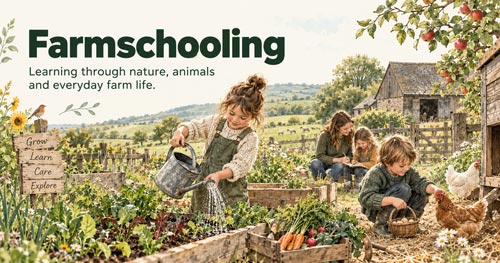
What Is Farmschooling?
Farmschooling is a hands-on approach to home education that uses farming, gardening, animal care and everyday outdoor activities as opportunities for learning. Instead of keeping education separate from daily life, farmschooling brings subjects like science, maths, geography and practical skills into real-world experiences.
You don’t need to own a farm to try farmschooling. A vegetable patch, a few pots of herbs, a community garden or regular visits to a local farm can all provide wonderful learning opportunities.
How Does Farm schooling Work?
Farmschooling is less about following a particular curriculum and more about learning through doing. Children might explore:
- Science and biology: Growing seeds, investigating soil, observing insects and learning about animal life cycles.
- Maths: Measuring garden beds, weighing produce, budgeting for supplies and calculating harvest quantities.
- Literacy: Keeping a nature journal, reading about wildlife or writing instructions for growing vegetables.
- Environmental education: Exploring composting, biodiversity, sustainable farming and seasonal changes.
- Life skills: Preparing food, caring for plants and animals, solving practical problems and developing responsibility.
For example, growing a few tomato plants could become a project involving measuring growth, researching plant biology, recording observations and eventually cooking with the harvest.
Is Farmschooling the Same as Unschooling?
Not quite. Farmschooling describes the setting and activities used for learning, whereas unschooling is an approach that emphasises self-directed learning.
The two can work beautifully together. A child might develop an interest in chickens, for example, and naturally begin exploring animal biology, nutrition, egg production and food systems. Other families may prefer structured lessons alongside their practical farm-based activities.
Do You Need a Farm to Start Farmschooling?
Absolutely not! Farmschooling can happen in a small garden, an allotment, a community growing project or even on a sunny windowsill. The important part is giving children opportunities to explore where food comes from, how living things grow and how people interact with the natural world.
Farmschooling can also be a lovely way to bring more outdoor time, curiosity and practical experiences into an existing home education routine.
Recording Farmschooling Activities
One of the lovely things about farmschooling is how much learning can happen during an ordinary day. Taking photographs, keeping a nature journal or recording projects can help children see how their skills and understanding develop over time.
With Strew’s home education app, you can record outdoor activities, add photos and keep track of the learning that happens along the way, making it easier to celebrate progress or create a home education report when needed.
In short: Farmschooling means using farming, gardening, nature and practical outdoor experiences as part of a child’s education. It’s flexible, hands-on and doesn’t require a farm of your own.
What does Farmschooling mean to you?
If you have got something to add to our Farm schooling page, please do let us know.