
This page is a plain-English overview for families. It’s not legal advice.
This page is written mainly for England. Home education is legal across the UK, but the law, guidance and local authority practice can differ in Wales, Scotland and Northern Ireland.
Home education law and guidance also evolve over time. If you have feedback or suggestions, please let us know.
If you’re unsure about your specific situation, consider getting independent advice.
Last Updated: 21st April 2026
Quick summary (England): Parents have a legal duty to ensure their child receives an efficient, full-time education suitable to age, ability, aptitude and any special educational needs, either by attendance at school or otherwise.
Local authorities can make enquiries if it appears a child may not be receiving a suitable education, and can use formal steps (including a School Attendance Order) if concerns aren’t resolved.
Also worth knowing: the government has been progressing changes through the Children’s Wellbeing and Schools Bill, including children-not-in-school registers and extra powers in some circumstances. This page explains the current position and the likely direction of travel, but proposed changes should not be treated as if they are already fully in force.
The legal starting point in England
In England, the core legal duty sits with the parent. The law says a parent must cause their child of compulsory school age to receive an efficient and full-time education that is suitable to their age, ability, aptitude, and any special educational needs.
What does “suitable” mean?
In practice, “suitable” is about whether the education is appropriate for your child and prepares them for life. It does not automatically mean following the national curriculum or matching school.
Do I have to follow a timetable?
“Full-time” doesn’t have a single fixed hourly definition in law for home education. What matters is whether the education is efficient and suitable for your child.

What parents are usually asked to provide
There is no single mandatory “home education report” format in England. But if a local authority has questions, parents are often asked to share enough information to show that a suitable education is being provided.
What a clear report usually shows
- What your child has been learning or exploring.
- Examples of activities, projects, reading, trips or discussions.
- How learning is organised in a way that fits your family.
- How progress, development or interests are being supported over time.
Important to know
- Different councils may ask for different things.
- There isn’t one single format every family must use.
- A clear, factual summary is often more useful than lots of paperwork.
- Simple evidence like notes and photos can be enough when they show learning clearly.
Get Strew Home Education App
If you want a simpler way to keep a clear record of learning and prepare structured reports when needed, you can download Strew for free:



Local authority role: what they can (and can’t) do
Under the current position in England, local authorities have duties around identifying children who might be missing education and safeguarding. If it appears a child may not be receiving a suitable education, the local authority can make enquiries and ask for information.
They can ask
- For information that helps them understand whether a suitable education is being provided.
- How education is organised (broad approach, resources, activities, opportunities).
- For examples of work or learning (this can include projects, photos, notes, reading lists, trips, etc.).
- To meet or speak (often proposed as helpful, but how you respond may vary by circumstances).
They generally can’t require
- A specific curriculum or “school at home”.
- Specific hours that match school timetables.
- Grades, tests, or a set format of evidence (unless a specific legal route applies).
- Routine demands that go beyond their current powers without a proper basis.
Local practice varies. If you feel pressure, it’s worth checking the exact wording of requests and the legal basis being relied on.
Practical tip: Keep communication calm and factual. You don’t need to “prove” your family’s choices: the key issue is whether your child is receiving a suitable education.
If the local authority is not satisfied
If, after enquiries, the local authority believes a suitable education is not being provided, they may follow a formal process that can lead to a School Attendance Order (SAO). In England, SAOs are linked to the Education Act 1996 (including section 437).
Important: Most home educating families never reach this stage. If it does escalate, consider getting independent advice and responding within any stated timeframes.
What helps most in practice
- Specific examples of learning (projects, books, trips, discussions, skills).
- Consistency over time (a timeline or dated notes).
- Clarity about your approach (child-led, project-based, structured, etc.).
- Evidence that fits your family (photos + brief notes are often plenty).
Record keeping: what’s “enough”?
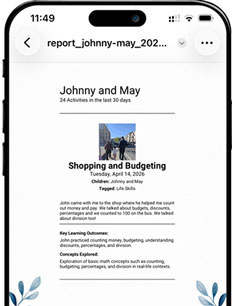
There’s no single mandated format for home education records. But keeping a simple record can be useful for: your own reflection, spotting progress, and responding calmly if questions arise.
Simple evidence ideas
- Short learning log notes (dated).
- Photos with a one-line explanation.
- Reading lists / library visits.
- Projects, models, drawings, writing samples.
- Trips, clubs, volunteering, community learning.
Helpful framing
- What did your child do?
- What were they exploring or practising?
- What skills did they use (or build)?
- What might you do next (optional)?
Want practical examples? Read: Evidence of learning in home education or see Strew’s report generator
Proposed changes: Children’s Wellbeing and Schools Bill
The government has been progressing changes through the Children’s Wellbeing and Schools Bill. At the time of writing, this is the main legislative route for changes affecting children not in school and home education in England.
What has been proposed
- A register of children not in school.
- New information requirements in relation to children not in school.
- Local authority consent for home education in some circumstances.
- Wider powers and follow-up in certain safeguarding-related situations.
What this means for parents
- It is sensible to keep clearer records, not less.
- You may face more formal information requests if the changes come into force.
- The exact practical expectations may still depend on final law, regulations, guidance and local authority practice.
- Different councils may still apply guidance differently in practice.
Important: Don’t assume every proposed change is already in force. It’s safest to distinguish between the current legal position and the direction of travel in current government proposals.
FAQs
Do I have to inform the local authority that I’m home educating?
It depends on your situation and local processes. For example, if your child is already registered at a school, you may need to follow the correct deregistration steps (and special rules can apply if your child is in a special school or has an EHCP). Local authority expectations can vary, so check your local guidance.
Do I need to follow the national curriculum?
Home education doesn’t automatically mean following the national curriculum. The key legal concept is that education must be efficient, full-time, and suitable for your child.
Can the local authority insist on seeing my child?
Local authorities may request a meeting or ask to speak with your child, often framed as helpful. Requirements can depend on context. If you’re unsure, ask for the legal basis of the request in writing and consider independent advice.
What happens if the local authority believes education is unsuitable?
They can pursue formal steps and may issue a School Attendance Order (SAO) if concerns aren’t resolved. If you reach this stage, getting advice can be wise.
Are the rules changing?
There are proposed changes in this area, particularly through the Children’s Wellbeing and Schools Bill. These proposals include children-not-in-school registers and additional powers in some circumstances. Because legislation, regulations and guidance can change, it’s important to check the latest position rather than assume all proposals are already in force.
Get Strew Home Education App
If you want a simpler way to keep a clear record of learning and prepare structured reports when needed, you can download Strew for free:
Want a simpler way to keep records and prepare reports?
Strew helps families keep a clear, structured record of learning so they’re better prepared if they need to share information with their local authority. Log learning moments, add photos, and turn everyday activities into something clear and easy to review, without turning home education into paperwork.
Privacy note: your family’s record is yours. Share only what you choose.