
Classical Education at Home
Classical education is a structured, knowledge-rich approach to home education built around language, logic, history, literature, memory, discussion and clear thinking. It gives children a strong foundation in ideas, stories and skills that can support learning for life.
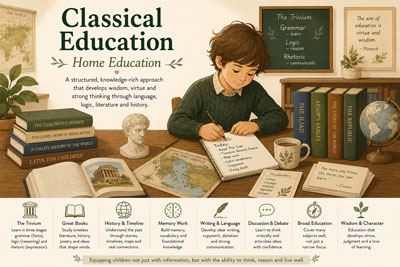
What is classical education?
Classical education is an older approach to learning that focuses on giving children a broad foundation in language, history, literature, reasoning and communication. It is often associated with the trivium: grammar, logic and rhetoric.
In home education, classical education usually means building knowledge carefully over time. Children learn facts, stories, vocabulary, timelines and key ideas, then gradually move toward deeper reasoning, debate, writing and independent thought.
It can sound formal, but at home it does not need to feel stiff. A classical approach can include read-alouds, maps, memory work, history stories, science, Latin, copywork, discussions, essays and plenty of thoughtful conversation.
Core features of classical education
What does a classical home education day look like?
A classical home education day is often more structured than some other home education styles. A child might practise maths, read from history, learn new vocabulary, recite a poem, work on handwriting, study a map, listen to a myth or fable, and discuss what they understood.
Older children may spend more time reading original texts, writing essays, comparing ideas, learning formal logic, studying science in more depth or preparing for exams. The aim is not just to remember information, but to learn how to think clearly and communicate well.
Who does classical education suit?
Classical education can suit families who want a clear plan, a broad academic foundation and a strong focus on reading, language, history and reasoning. It can be especially helpful for parents who like structure but still want deep conversations and rich books rather than only worksheets.
It may also suit children who enjoy stories, facts, memory, debate, puzzles, languages, big questions or a sense of progression. For children who dislike pressure, the approach can be softened with shorter lessons, more discussion and hands-on activities.
- Families who want a structured, knowledge-rich approach
- Children who enjoy history, stories, maps, language or debate
- Parents who want clear progression across subjects
- Older children preparing for more formal study or exams
- Home educators who want to build strong thinking and communication skills
How to record classical education learning
Classical education often creates plenty of visible evidence, but it is still worth recording the thinking behind the work. A timeline entry, discussion, poem recital or map activity can show real understanding, even when it is not a long written assignment.
Useful records might include books read, history topics, memory work, copywork, written narrations, essays, maps, science notes, vocabulary, discussions and projects.
- Books, myths, fables, poems and historical texts read
- Memory work such as poems, dates, facts or speeches
- Timeline, map work, notebook pages and written summaries
- Discussions, debates and questions that showed understanding
- Writing progress, copywork, dictation, essays or narrations
- Science, maths, language or logic work completed over time
Using Strew for classical home education
Strew can help classical home educators keep a clear record of structured learning without creating extra admin. You can log readings, discussions, memory work, writing, map activities, science lessons, projects and exam preparation as they happen.
Over time, those records show both coverage and progress. That can be useful for your own planning, for spotting gaps, and for creating a home education report that explains your child’s learning in a clear, confident way.



Classical Education FAQs
What is classical education in home education?
Classical education is a structured approach that focuses on language, knowledge, reasoning and communication. It often uses history, literature, memory work, logic, writing and discussion to build a broad academic foundation.
What are grammar, logic and rhetoric?
These are often called the three stages of the trivium. Grammar focuses on foundational knowledge, logic focuses on reasoning and connections, and rhetoric focuses on clear expression, argument and communication.
Is classical education too formal for home education?
It can be formal, but it does not have to be rigid. At home, families can use classical ideas through stories, discussion, maps, memory work, reading aloud and short lessons without recreating a classroom.
Do classical home educators need to teach Latin?
Not necessarily. Some classical families include Latin because it supports vocabulary, grammar and historical understanding. Others focus on English, modern languages, history, literature and logic without Latin.
Is classical education suitable for young children?
Yes, if it is kept age-appropriate. Younger children often enjoy stories, songs, memory work, maps, myths, copywork, nature study and hands-on activities alongside short lessons.
Can classical education work for creative children?
Yes. Classical education can include art, music, drama, storytelling, poetry, creative writing, model making and lively discussion. It does not need to be only academic or book-based.
How does classical education teach critical thinking?
Critical thinking is developed through discussion, comparison, logic, debate, close reading, asking good questions and learning how to explain ideas clearly rather than simply memorising facts.
Can I combine classical education with other approaches?
Yes. Many families combine classical education with Charlotte Mason, Montessori, unit studies, forest school or project-based learning. You can use the structure of classical education without using it for every part of your week.
How do I show evidence of classical education?
Evidence can include reading lists, written work, memory work, maps, timelines, discussion notes, projects, copywork, maths, science, language study and progress records. Strew can help organise these into a clear home education record.
Can Strew help with classical education records?
Yes. Strew can help you record readings, writing, history, memory work, discussions, projects and structured lessons, then turn them into clear home education reports when needed.
Record Classical Learning Clearly
Strew helps you capture readings, memory work, writing, history, discussions and structured lessons, then turn them into clear home education records and reports when you need them.