
Project-Based Learning at Home
Project-based learning is a hands-on home education approach where children learn through meaningful projects, questions, making, research and problem-solving. Instead of studying subjects in isolation, learning grows around a real goal, topic or challenge.
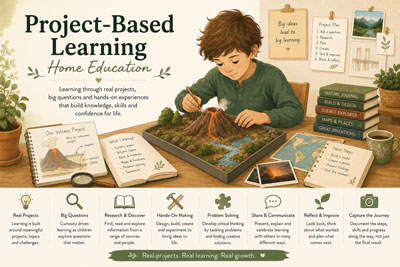
What is project-based learning?
Project-based learning is an approach where children learn by exploring a topic or solving a problem over time. A project might last an afternoon, a week or several months, depending on the child’s age, interest and depth of learning.
At home, this could mean building a bug hotel, creating a magazine, designing a board game, planning a garden, making a short film, researching local history, building a website or investigating how a volcano works.
The value is not only in the finished project. Children also learn through planning, trying, failing, adapting, researching, measuring, writing, explaining and sharing what they have made.
Core features of project-based learning



What does project-based home education look like?
Project-based learning often starts with a question, interest or challenge. Your child might ask how bridges stay up, why birds visit your garden, how games are made, what life was like in Ancient Egypt or whether you could grow your own vegetables.
From there, the project can naturally include reading, writing, maths, science, art, design, history, technology, communication and practical skills. The learning feels connected because everything serves the project.
Who does project-based learning suit?
Project-based learning can work well for children who like making, experimenting, researching, building, drawing, designing, performing or following a big idea over several days. It can be especially useful for children who struggle with disconnected worksheets but come alive when learning has a real purpose.
It also suits parents who want learning to feel practical and meaningful. You do not need to turn every project into a huge production. Small, focused projects can be just as valuable.
- Children who enjoy making, building, designing or investigating
- Families who want learning to connect across subjects
- Children who learn best through real goals and practical outcomes
- Parents who want a flexible but purposeful approach
- Home educators looking for strong evidence of learning without endless worksheets
How to record project-based learning
Project-based learning creates excellent evidence, but it is easy to miss the steps if you only record the final result. The planning, research, mistakes, changes and explanations often show the deepest learning.
Useful records include photos, sketches, notes, research sources, drafts, measurements, finished work, reflections and short summaries of what your child learned along the way.
- The original question, idea or project goal
- Research, books, videos, interviews or trips used
- Photos of each stage, not just the finished result
- Plans, sketches, calculations, drafts and design changes
- Problems your child solved or decisions they made
- Reflections on what worked, what changed and what they might do next
Using Strew for project-based learning
Strew is a strong fit for project-based learning because it helps you capture the whole learning journey, not just the finished product. You can log each stage of a project, add photos, record questions, note learning areas and build a clear picture of progress over time.
This is especially useful for home education reports. Instead of trying to explain a project from memory, you can show the research, skills, thinking and development that happened along the way.
Project-Based Learning FAQs
What is project-based learning in home education?
Project-based learning is an approach where children learn through meaningful projects, questions or challenges. It often combines several subjects around one practical goal or topic.
Is project-based learning the same as child-led learning?
Not always. Projects can be child-led, parent-suggested or planned together. The key feature is that learning happens through developing a project over time.
Do projects need to be big or impressive?
No. A project can be small and still valuable. Making a bird feeder, planning a meal, creating a comic, planting seeds or researching a favourite animal can all become meaningful project-based learning.
How does project-based learning cover subjects?
One project can include many subjects naturally. For example, building a model village might include maths, design, writing, geography, history, art, planning, communication and problem-solving.
Is project-based learning suitable for younger children?
Yes. Younger children can take part in simple projects through play, making, storytelling, nature, cooking, building and exploring. The project should match their age and attention span.
Can older children use project-based learning?
Yes. Older children can use project-based learning for research projects, writing, coding, design, science investigations, business ideas, creative work, volunteering, practical skills or exam-related topics.
How do I avoid projects becoming chaotic?
Keep the goal clear, break the project into small steps and record progress as you go. You do not need to control every detail, but a simple plan can help the project stay useful and manageable.
How do I show evidence of project-based learning?
Evidence can include photos, notes, sketches, plans, research, finished work, videos, presentations, written reflections and records of the problems your child solved during the project.
Can project-based learning be mixed with other styles?
Yes. It works well alongside unschooling, Charlotte Mason, Montessori, unit studies, classical education, forest school or structured lessons.
Can Strew help record project-based learning?
Yes. Strew helps you log project stages, photos, notes, learning areas and reflections, then turn those records into clear home education reports when needed.
Record the Whole Project, Not Just the Finished Result
Strew helps you capture questions, research, photos, practical skills, experiments and finished work, then turn project-based learning into clear home education records and reports.