
Unschooling Home Education
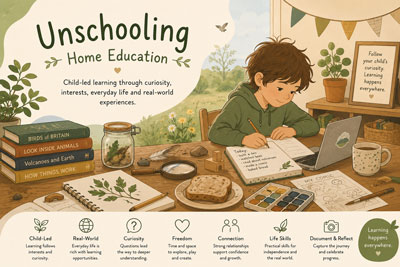
Unschooling is a child-led approach to home education where learning grows from curiosity, everyday life, interests, play, questions and real-world experiences. Instead of following a fixed school-style curriculum, unschooling trusts that children can learn deeply when they are supported, respected and given room to explore.
What is unschooling?
Unschooling is a form of home education that puts the child’s curiosity at the centre of learning. Rather than dividing the day into school subjects, unschooling families often learn through real life: cooking, reading, gaming, building, nature, conversations, trips, hobbies, projects and problems that naturally come up.
This does not mean doing nothing. Good unschooling is active, attentive and responsive. Parents still provide resources, experiences, conversation, boundaries and support, but they do not need to turn every interest into a formal lesson.
The result can look less like “school at home” and more like a rich family life where learning is noticed, extended and valued.
Core features of unschooling
What does an unschooling day look like?
An unschooling day can vary a lot. One day might involve a long walk, building a den, reading about insects, watching a documentary and helping cook dinner. Another might revolve around Minecraft, animation, music, pets, gardening, coding, a museum visit or a big question your child has asked.
The common thread is that learning follows interest rather than a preset timetable. Parents often help by offering ideas, asking thoughtful questions, finding books or videos, arranging visits, joining in, or helping the child take an interest further.
Who does unschooling suit?
Unschooling can suit families who want learning to feel natural, flexible and connected to real life. It can be especially helpful for children who have lost confidence in school, who resist formal lessons, or who learn best through intense interests and hands-on experiences.
It also suits parents who are comfortable observing, adapting and trusting the learning process. That trust can take time to build, especially if you are used to measuring education through worksheets, tests or timetables.
- Children with strong interests or curiosity-led learning patterns
- Families who want a flexible, low-pressure approach
- Children recovering from school stress, burnout or anxiety
- Parents who enjoy learning alongside their child
- Families who want education to blend naturally with everyday life
How to record unschooling learning
Unschooling can be rich, but it can also be hard to explain afterwards if you do not keep notes. Because learning often happens through conversations, play, interests and everyday life, it is easy to forget how much your child has actually covered.
Useful records might include photos, short notes, questions asked, books read, videos watched, places visited, projects attempted, skills practised and changes in confidence or independence.
- Interests your child followed and how they developed
- Photos of projects, makes, experiments or outdoor learning
- Books, documentaries, podcasts, games or resources used
- Conversations that showed understanding or new questions
- Practical skills such as cooking, budgeting, measuring or planning
- Progress in confidence, independence, persistence or communication



Using Strew for unschooling
Strew is a strong fit for unschooling because it lets you record learning as it happens, without needing to force it into a school-style structure. You can quickly log a conversation, a project, a game, a walk, a documentary, a practical skill or a sudden burst of curiosity.
Over time, those small records become a clear picture of your child’s learning. This can be helpful for your own confidence, for spotting patterns, and for creating a home education report if you ever need one.
Unschooling FAQs
Is unschooling legal in the UK?
Home education is legal in the UK, and families are not required to follow the National Curriculum. The key expectation is that a child receives an efficient, full-time education suitable to their age, ability, aptitude and any special educational needs. Unschooling families may still need to explain how learning is happening in a clear way.
Is unschooling the same as doing nothing?
No. Unschooling is not neglecting education. It is a child-led approach where parents support learning through resources, conversation, experiences, practical help and attention to the child’s interests.
How do unschooled children learn maths?
Maths can appear through cooking, shopping, measuring, building, gaming, budgeting, time, travel, design, coding, board games and everyday problem-solving. Some families also use maths resources when the child wants or needs more direct support.
How do unschooled children learn to read?
Many children learn through being read to, following interests, using games, captions, recipes, messages, comics, signs, websites and books they genuinely want to access. Some families add phonics or reading practice when helpful.
Can unschooling work for anxious children?
It can, especially for children who need time to recover from pressure or school-related stress. A flexible approach can help rebuild confidence, but some children also benefit from gentle rhythm, predictability and clear support.
Do unschooling families use any structure?
Many do. Unschooling does not have to mean no rhythm at all. Some families have regular meetups, library days, outdoor time, project time, chores, clubs or shared family routines while still keeping learning child-led.
How do I know if my child is learning enough?
Look for progress over time: new questions, deeper interests, practical skills, better communication, problem-solving, confidence, reading, making, reasoning and independence. Keeping short records can help you see patterns you might otherwise miss.
How do I create evidence of learning for unschooling?
Evidence can include notes, photos, projects, reading logs, trip records, videos, screenshots, artwork, written work, practical tasks and summaries of conversations. Strew can help turn these everyday moments into clearer learning records.
Can I mix unschooling with structured lessons?
Yes. Many families are partly unschooling and partly structured. You might follow your child’s interests most of the time, while also using a maths app, reading practice, clubs, tutors or project plans when they are useful.
Is unschooling suitable for older children?
Yes. Older children may use unschooling to pursue deeper interests such as music, coding, animals, sport, art, entrepreneurship, writing, gaming, mechanics, science or volunteering. Some may later choose exams, courses or qualifications when they have a clear reason to do so.
Record Unschooling Without Turning It Into School
Strew helps you capture child-led learning, projects, questions, real-world skills and everyday discoveries, then turn them into clear home education records and reports when you need them.