
There is no legal requirement in England to keep home education records in a particular format. However, keeping a simple record of what your child has been learning can make it much easier to explain your home education if your local authority asks for information.
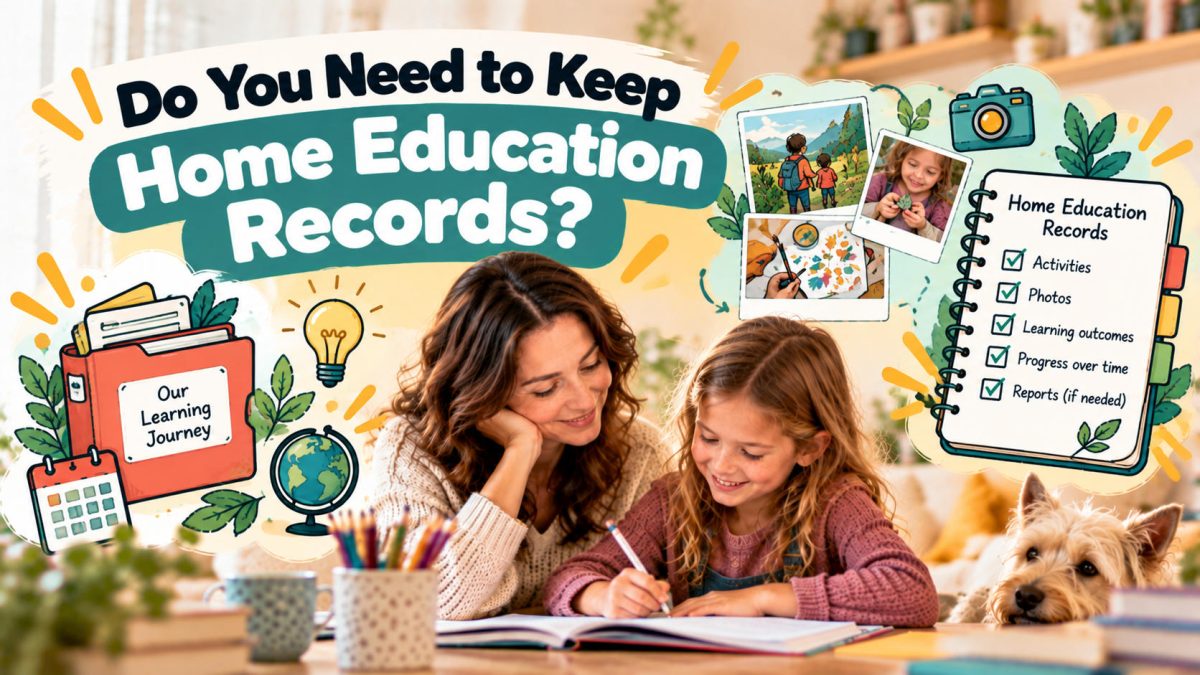
Are home education records legally required?
Parents in England have a legal responsibility to ensure that a child of compulsory school age receives an efficient, full-time education suitable to their age, ability and aptitude, and to any special educational needs they may have.
There isn’t, however, a prescribed home education diary, portfolio or record that every parent must maintain. You don’t have to recreate school at home or follow the National Curriculum.
You can read more about what might count as evidence of learning in home education.
Why is keeping a record still useful?
The practical reason is simple: it’s much easier to explain months of learning when you’ve recorded it as you go.
Learning at home can happen through books, projects, conversations, days out, practical activities, online resources, groups and everyday life. Six months later, it’s surprisingly difficult to remember all of it.
A basic home education learning log might record:
- what your child did or explored
- books, resources or places you used
- projects and activities
- photos or examples of work
- interests and skills developing over time
- brief observations about progress
It doesn’t need to become another curriculum or a daily paperwork exercise.
Can the local authority ask about your home education?
Yes. In England, local authorities have responsibilities relating to children who may not be receiving a suitable education, and DfE guidance says they are entitled to make informal enquiries about the education being provided.
Parents aren’t legally obliged simply to agree to every request for a meeting, home visit or particular form of evidence. However, the DfE also warns that providing no information can leave the authority unable to establish that suitable education is taking place and may lead to further action.
That’s an important distinction: keeping records isn’t the same thing as being legally required to maintain a school-style portfolio.
A straightforward record simply means that, if you decide to respond with information about your child’s education, you aren’t trying to reconstruct everything from memory.
Using Strew to keep a record
Strew lets you record activities as they happen, including notes and photos, so those small entries gradually build into a record of your child’s learning. If you later want an overview, you can turn those records into a home education report rather than writing one from scratch.
The important bit isn’t having an app, it’s having a manageable way to capture the learning that’s already happening.
Video transcript
Why are home ed parents using Strew to record learning?
Keeping a record gives you continuity of what you’ve been doing and how your child’s learning and progress have developed.
This can be particularly useful if your local authority requests information. That can feel worrying because you know you’ve been doing lots, but actually remembering and pulling all of that together can be difficult.
If you’ve been recording learning in Strew, you can generate a report from those records rather than trying to remember everything you’ve previously done.
The important thing isn’t simply having the app, it’s actually using it to record your child’s learning as you go.



Leave a Reply