
If you’re considering home education in England, three useful things to know are that home education doesn’t have to look like school, social opportunities can be deliberately built into your week, and keeping simple records as you go can make life much easier later.
You don’t need to have your entire home education journey planned before you begin.
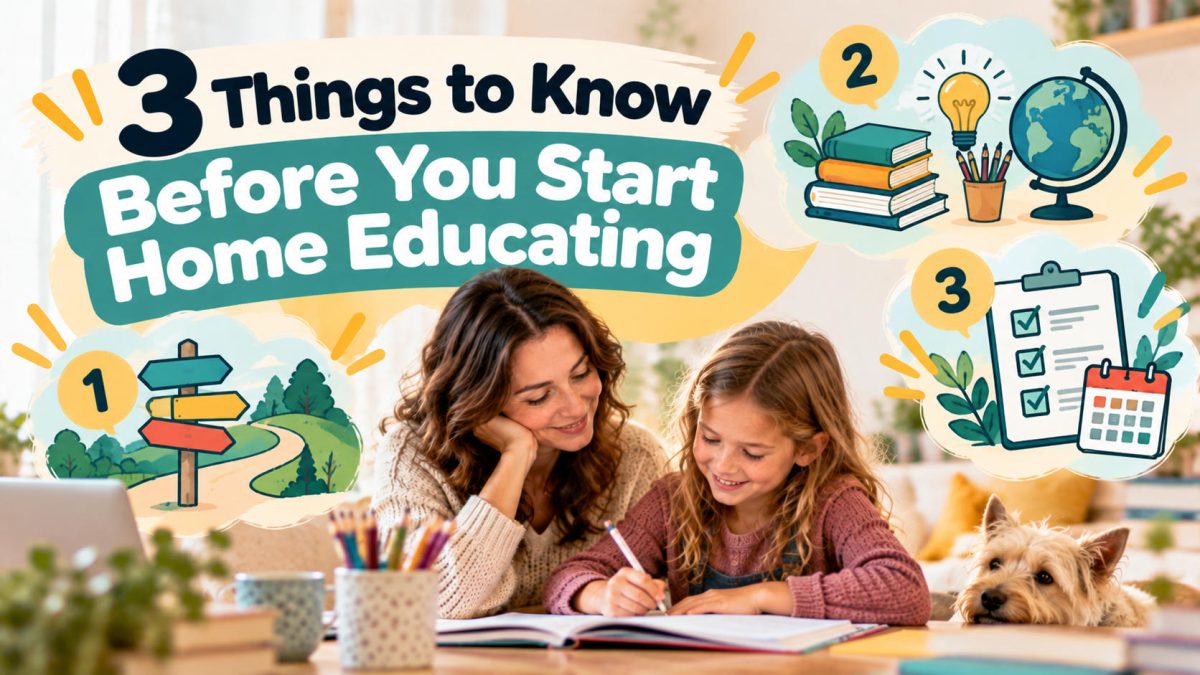
1. Home education doesn’t have to look like school
One of the biggest adjustments when you start home educating can be realising that you don’t have to recreate a classroom at home.
In England, parents are responsible for providing a full-time education suitable to their child’s age, ability, aptitude and any special educational needs. You do not have to follow the National Curriculum.
That leaves considerable room for different approaches.
You might use structured lessons and workbooks, follow your child’s interests, learn through projects and trips, use online resources or combine several approaches.
In reality, many families end up with an eclectic home education approach, borrowing different ideas according to what works for their child.
You don’t necessarily need to decide on a label before you start.
2. Think about social opportunities
A common question when considering home education is: how will my child socialise?
Home education doesn’t mean children have to learn at home or spend their days only with their immediate family.
Depending on where you live, you may find:
- local home education meet-ups
- sports and activity groups
- Forest School sessions
- classes specifically scheduled for home-educated children
- trips organised by other home educators
- informal groups of families meeting regularly
- home education co-ops
Facebook groups are one way of finding your local community, but they’re not the only option. Libraries, leisure centres, community organisations and local home education networks can also be useful.
A home education co-op can provide both shared learning and opportunities for children and parents to build relationships with other home-educating families.
3. Start keeping simple records early
This is something that’s easy to overlook when you’re concentrating on actually starting home education.
You don’t need to document every moment, and there is no universal requirement in England to submit an annual home education report.
However, local authorities can make informal enquiries to establish whether a child is receiving a suitable education. Different councils have different approaches to contact with home-educating families.
Some councils make initial contact asking about the education you’re providing and may contact families periodically afterwards. That is different from there being a nationally prescribed process where every parent must submit an initial plan followed by an annual report.
Keeping simple records can therefore be useful without letting administration take over your home education.
Save things such as photos, activities, books, projects, trips and occasional notes about what your child has been exploring.
Over time, those small records can build a surprisingly detailed picture of their education.
Using Strew
Strew gives you a private learning journal where you can record activities, photos and observations as they happen rather than relying on social media, scattered notes and your memory.
If you later want to look back at how your child’s education has developed, you’ve already got a record to work from.
Video transcript
There are three things to consider when you’re new to home education. These things will get less obvious as I go on, with the third one being probably the most important.
Number one: home education doesn’t need to look like school.
Whether that be a flexi-school approach, a more structured approach, child-led or completely unstructured unschooling, that’s down to you as the parent to choose what you feel is a suitable education for your child.
Number two: how is my home-educated child going to socialise?
Facebook is your friend. There are a tonne of groups on Facebook specific to home education that people have set up with the view of bringing together home-educated children. Usually you’ll find a bunch of activities and home ed sessions, depending on what’s available in your area.
And then finally, and most importantly, number three: recording what you do as a home-educating parent.
When you first start home educating, your local authority may ask for information about how you’re providing a suitable education for your child. Depending on your local authority, they may contact you again later to ask about the education you’re providing.
It’s useful to be able to reflect on where you started, how things have progressed and how you’ve worked towards your goals.
You can do that with evidence and activities. An app like Strew allows you to record the learning you’ve been doing with your child throughout the year and generate a simple report showing what you’ve recorded.
So those are three things to consider.



Leave a Reply