
The Children Not in School (CNIS) register is a new system created by the Children’s Wellbeing and Schools Act 2026. Once the relevant provisions are brought into force, local authorities in England and Wales will have to maintain registers of certain compulsory-school-age children who are not receiving all of their education at school, including many home-educated children.
The Act is now law, but the CNIS provisions are not something parents should assume are already operational until they are formally commenced.
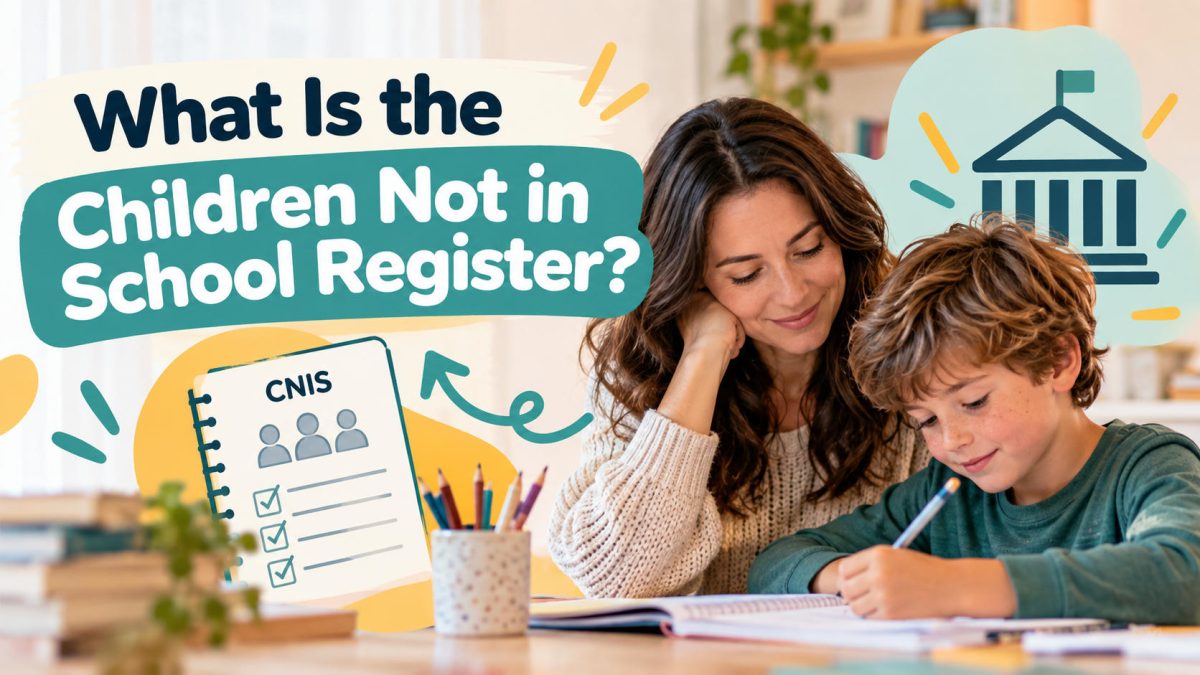
Who will be included on the Children Not in School register?
Section 38 of the Children’s Wellbeing and Schools Act introduces the new registration system.
Broadly, the register covers eligible children of compulsory school age who live in the local authority’s area and:
- aren’t registered at a relevant school
- are registered at a school but have arrangements to receive some or all of their education elsewhere
- are aged 14 to 16, attend certain further education provision part-time and aren’t also registered at a relevant school
This means many children receiving elective home education will fall within the new system once it is in operation.
Strew has a separate plain-English explanation of the Children Not in School register.
Does the register make home education illegal?
No.
The introduction of the register does not remove the right to educate a child otherwise than at school.
Parents remain responsible for ensuring that their child receives an efficient, full-time education suitable to their age, ability, aptitude and any special educational needs.
The CNIS register changes the visibility and information-sharing system around children who aren’t receiving all their education at school. It doesn’t turn home education into school at home or require every family to follow the National Curriculum.
Will parents have to provide information?
Yes, once the relevant provisions are in force, the new system includes duties for parents to provide specified information to their local authority.
The information recorded can include identifying details about the child and parents, as well as information relating to who is providing the child’s education.
That represents a significant change for some families.
Under the previous system, there was no universal legal requirement for a parent whose child had never been registered at school to proactively register that child as home educated with their council.
The CNIS system creates a much more formal relationship between affected families and the local authority.
Does being on the register mean the council controls your home education?
No.
Being registered does not mean the local authority becomes responsible for providing your child’s education.
It also doesn’t automatically require you to follow a particular curriculum, use school hours or reproduce a classroom environment at home.
The Children’s Wellbeing and Schools Act does introduce other changes affecting local-authority oversight, information sharing and some families’ ability to withdraw children from school, so it’s worth understanding the wider legislation too.
Strew has a guide to the Children’s Wellbeing and Schools Act changes covering the broader picture.
When does the Children Not in School register start?
The Children’s Wellbeing and Schools Act received Royal Assent in April 2026, so the CNIS register is no longer simply a proposal contained in a Bill.
However, becoming law and coming into force are different things.
The register provisions require commencement before the new system becomes operational. Parents should therefore check current government guidance rather than assuming that all of the Act’s new home education requirements already apply.
This page was last checked in September 2026.
Using Strew
The CNIS register itself doesn’t mean you need to start producing school-style paperwork about everything your child does.
However, keeping simple records of activities, books, projects and other learning can make it easier to explain your child’s education when needed. Strew provides one place to keep those records as they happen rather than reconstructing them later.
Video transcript
What are the changes to the Children’s Wellbeing and Schools Act?
The major change is Section 38 of the Act.
What this does is create a duty on the local authority to have a Children Not in School register.
A child can fall within this register if they meet certain criteria, including that they aren’t registered at a relevant school, are registered at a school but have an arrangement where some or all of their education is taken outside that school, or if the child is aged between 14 and 16, attending further education part-time but isn’t also attending school.
What does that mean?
In simple terms, this introduces a formal register that will include many children who are home educated.
Don’t panic. It isn’t making home education illegal. It’s simply creating a register covering children who aren’t receiving all of their education at school.
There are a bunch of useful guides on the Strew website, which you can find by visiting strew.app.



Leave a Reply