
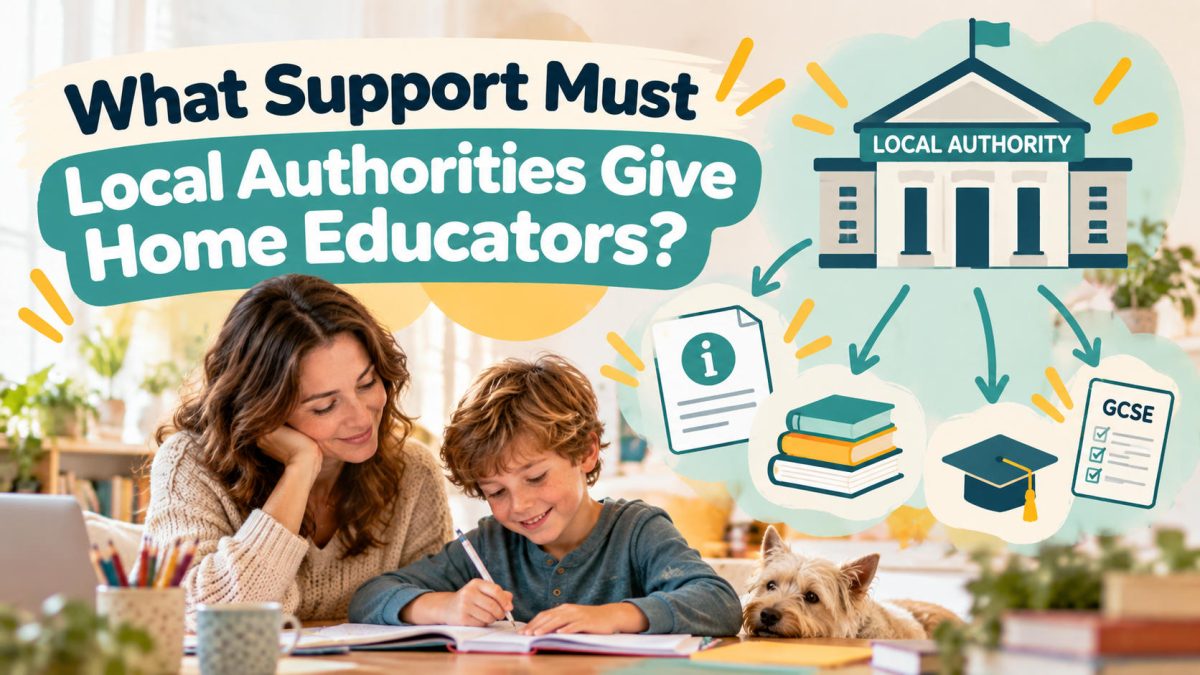
Under the Children’s Wellbeing and Schools Act 2026, local authorities will have a new duty to provide certain home-educating parents with advice and information about their child’s education when they ask for it. This can include advice about education, information about sources of support and information about accessing GCSE examinations.
It does not mean councils have to provide a curriculum or become responsible for delivering your child’s education.
What does Section 436G actually say?
Section 38 of the Children’s Wellbeing and Schools Act 2026 inserts several new provisions into the Education Act 1996, including section 436G.
Under section 436G, if a qualifying parent of a child on the new Children Not in School register requests support, the local authority must provide support by securing advice and information relating to that child’s education.
The Act says this may include:
- advice about the child’s education
- information about sources of assistance for their education
- information about access to GCSE examinations
Exactly what advice and information is appropriate is left to the local authority, which must consider what the parent has actually requested.
Could this help with GCSEs?
Potentially, yes.
Accessing GCSEs as a home educator can be more complicated than it is for pupils enrolled at school. Families may need to identify suitable qualifications, find an exam centre accepting private candidates and arrange entries themselves.
The fact that GCSE access is specifically mentioned in section 436G is therefore significant.
It doesn’t mean the local authority automatically has to pay exam fees or provide an exam centre. The statutory duty is to provide advice and information relating to access.
That distinction matters.
What other support could a parent ask about?
The legislation deliberately leaves the scope relatively broad.
Depending on your circumstances, you might ask your local authority for information about educational options, qualifications, local services or sources of educational support.
The explanatory notes to the Act describe section 436G as establishing a minimum requirement for local authorities to provide advice and information to parents who request it. Authorities remain free to provide additional support beyond that minimum.
Does the council become responsible for your home education?
No.
The fundamental responsibility for providing a suitable education remains with the parent.
Section 436G doesn’t require the local authority to design your home education, provide a curriculum or take over responsibility for teaching your child.
Families can continue to use very different approaches, from formal courses and structured home schooling to interest-led approaches such as child-led learning.
The new provision simply means that where section 436G applies, requesting relevant advice and information isn’t entirely dependent on whether your particular council happens to offer it voluntarily.
Who does the new support duty apply to?
There is an important qualification.
Section 436G is connected to the new Children Not in School register. The support duty applies when a parent of a child registered under section 436B requests it.
The legislation also contains exclusions. For example, the section 436G support duty does not apply in the same way to certain children who remain registered at a relevant school or where particular existing local-authority education duties already apply.
So this shouldn’t be read as a general duty requiring councils to provide every form of support requested by every home-educating family.
Using Strew
Strew can’t replace advice from your local authority, particularly around things such as qualifications and exam access.
What it can do is help you maintain a clear record of your child’s activities, interests and learning. That can make it easier to explain your child’s current education and identify the areas where additional information or support might actually be useful.
You can also find ongoing practical resources through the Strew home education newsletter.
Video transcript
Changes to the Children’s Wellbeing and Schools Act. This one is a very important video.
Section 436G provides the local authority with a duty to provide advice or information about the child’s education if the parent requests it.
The Act specifically says that this can include advice about education and information about other sources of support.
Basically, the Act doesn’t mean that councils become responsible for educating children. There is a statutory duty that the local authority has when an eligible parent requests that advice.
That could include advice about GCSE support or GCSE access, qualifications, educational options or other support services or opportunities.
However, it’s important to remember that this doesn’t give the local authority a duty to become your provider of education or provide you with a home education curriculum.
The Act is quite broad. It gives a duty to the local authority to offer certain support while leaving the authority discretion over the appropriate advice and information, taking into account what the parent has requested.
Yes, the new system creates more obligations on parents. However, it also gives local authorities a duty to offer advice and information when qualifying parents ask for it.
That is an important part of the balance.
If you’d like more information, follow the Strew social media channels and visit strew.app.



Leave a Reply